Fruit Routes Loughborough

Written by Mita Solanky (Fruit Routes Artist/Co-ordinator)
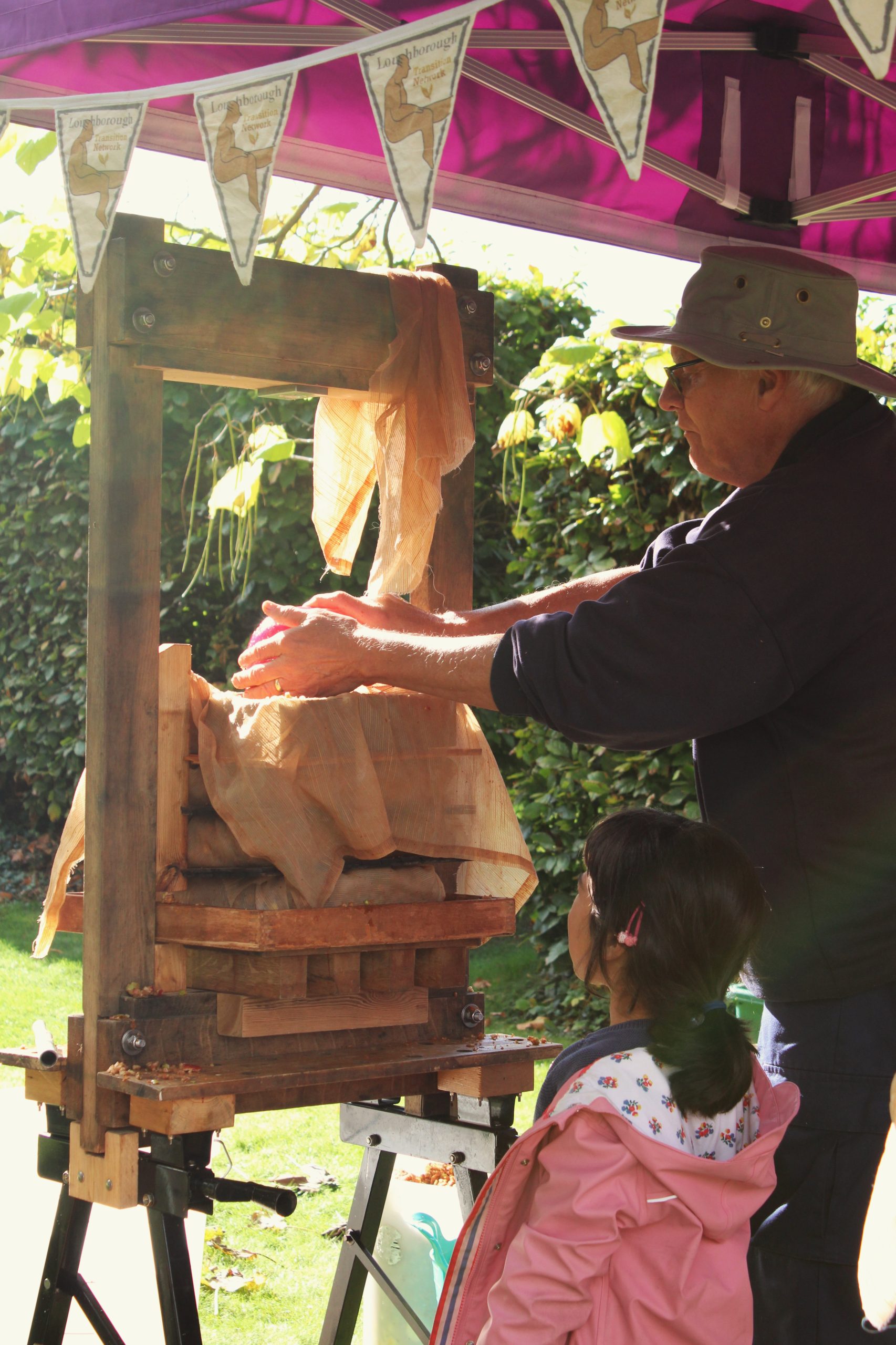
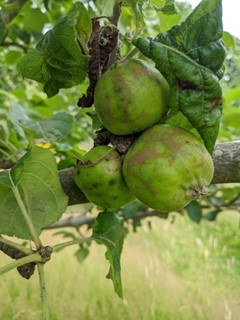
I was asked to share the wonderful ways in which we can use the thinned fruit that were harvested at the Fruit Routes Fruit Thinning day in July. The gardens team and members of the community, staff, and students all helped to pick unripe fruit in the Barefoot Orchard, to allow the trees to bear a healthier autumn harvest, and prevent tree damage by overladen branches. In one hour we collected 4 trugs of apples! It was a scorching day, yet the trees glowed bright green against the bleached grass. The fruit trees have to reach deep into the water table to draw water for the fruits to grow, and the more fruits there are the more work the trees have to do, causing them stress and making them susceptible to disease.
Taking some of the burden away would be better for the trees. It is through these acts of care between human and non-human species that we create an environment that is self-regulated. The trees gave us welcome shade in the heat, and such an abundance of fruit to share with others. We gave each other tips and recipes of what we could do with the fruit, and we made new friends and connected by being together in nature.

The Climate Pickle
In the UK now we are seeing drier hotter summers as the climate changes. I see nature adapting to these changes, and we humans can also adapt our food habits to the climate we have. The temperate cold climate way of preserving is to ‘cook’ the fruit using fuel other than the sun – wood, gas, coal. Once cooked we add sugar, making jams and jellies and chutneys.
One way to adapt our food habits is to learn from other cultures which resemble the climate we are now experiencing. My parents grew up in Gujarat, India, which is a semi-arid state. The diet, which consists mainly of lentils, seasonal greens, and millet flatbreads eaten with a dash of ‘atthanu’ (pickle). The pickles contain spices that help the body digest the lentils.
I’ve watched my mother make atthanu during English summers, when we would cut up crates of carrots from the local market into batons and spread them out on a sari to dry in the sun on our flat-roof over the bathroom of our terrace-house. Each evening we’d climb out of the bedroom window gathering up the sari, and as soon the sun has burnt off the morning dew we’d climb out and lay them out again. For a few hot days in a row is all that was needed for the carrots to shrivel into little rust coloured curls. The rusty curls were smothered in a mixture of ground methi (fenugreek), ground mustard, and gor (jaggery) and packed-in to ex- sweetshop jars that had once held pear drops and cherry sours. The jar would sit in the pantry all summer, and come autumn malt vinegar would be added, and it would be left to mature again until winter. The pickle jar would last until the following winter.
This is a way of preserving that uses the abundant sunshine to dehydrate (sun-dry) any berries, fruits, or vegetables. The pickling involves leaving the dried fruit to mature in a spice mixture for a few months before adding vinegar and leaving it for a second maturing and then it is ready for eating.
The process of picking and chopping the fruit are very social activities, then each person will create their own unique spice blend, so it’s very individual too. I love that the taste of the pickle reflects a relationship we create with the harvest each year, everyone has they own taste, though the apples are all from one harvest. Pickling is a living process, not a recipe to follow rigidly, there are no measurements needed, it’s gauged using your senses of seeing, smelling, tasting, listening, touching , and at each stage feeling your way through it…
Fruit Routes & Sisters’ Apple Atthanu
When I got my apples home after the Fruit thinning the thought of standing over a hot stove for hours on a baking hot day seemed rather a waste of all free energy the sun was giving me. So I decided to sun-dry my apples and make ‘atthanu’. It’s best to do this when a heatwave is forecast as you need a few days for sun-drying.
My sister was home from London that day, we sat chatting while we prepared the unripe harvest apples, removing the stalks and butts and cutting away the hard core. We cut them into small bite size chunks. Mine were small and even, hers were bigger and irregular, it was a good mix.
I then sprinkled them generously with finely ground rock salt, my sister didn’t think I had put enough salt, but I thought it was okay.

Sun-bathing in the garden
My other sister had cleared out her room the week before, and I found a large cardboard tray she’d put out for recycling. I saw that it would be perfect for laying the apples out to dry on.
The salted apple pieces were spread spaced out on the cardboard tray. The apples are basically sweating and you need something absorbent, like paper or cloth for them to lay on to dry, otherwise they will become slimy. I propped the tray on the seat of a garden chair so I could move them to face the sun, so they could be sun bathed all day long.
In four days the apple pieces were leather hard and made a rattling sound like pebbles when shaken on the tray and they had turned a golden brown colour. The smell of them sun- drying in the garden was exactly like the smell of baked apples, and was delicious.


When it rains, grind spices…
After the heatwave, it rained – a perfect day to spice up the apples and jar up the pickle…


So while the garden was having a much needed drink, I made a spice mixture. The base is coarsely ground mustard and fenugreek, some ground turmeric, some hing powder (asafoetida), and roasted rock salt (you roast it to remove any moisture that may be present to avoid spoiling). I also added some sweet paprika powder and roasted fennel seeds (this is experimental). I mixed these spices in a bowl then heated some raw organic hemp seed oil to smoking point and let it cool, then mixed in into the spices and left the spices to soak up the oil for a few minutes.
Give us a hug!
I shook the sundried apple pieces in a big strainer to remove the excess salt and then added the spice mixture to the apples and stirred through so each piece got coated. The spice mixture hugs the apples and sits in all the crevices. Once they were all coated well, I grated some gor (jaggery – raw cane sugar) into the mixture and mixed well.
Then let it to soak in for an hour and mixed again.
Finally I took a lick of the spoon I’d used to mix with, it was kicking!

With Maturity comes flavour…
The pickle was then ready to go into a large jar, I found one that could hold the whole mixture and have a little space to shake the jar, this is useful in case later on you decide you want to add any more mix to it, gor or oil or other spices as it matures. I used greaseproof paper between the lid and the jar to make the seal airtight. I shake the jar every now and then to say hello and check all is getting along in there!
I will leave the pickle to steep for at least a month, the longer the better. The pickle in this un-vinegared state can be kept for many years!
After a few months I will add vinegar. (I am making vinegar using the apple scraps I had left over after cutting up the apples which should be ready by the same time, it’s an experiment!). I will decant some of the pickle mixture into a smaller jar first, pushing it down to fill as much as possible then pour in the vinegar.
Once the vinegar is added, I will leave for at least a week to steep. This pickle can be kept for a year or more. When you add the vinegar the apples start to re-hydrate and soften, the texture will be like a fruit leather but with a slight crisp bite.

Pickle-off
This ain’t no pretty pickle, no, this is a lip smacking, head fizzing, tongue tingling, mind blowing pickle. Eat it with care, it’s intense, and will give you a warm glow in the winter months and make you sweat it in the summer. A couple of teaspoons is enough to compliment your meal, be it some flatbread, rice or pasta, with soup, stew or salad. It will enliven any dish and make it sing.
This year I’m hoping to bring the pickle along for tasting at the 15th Anniversary Harvest Festival Celebrations at LAGS in October, so why not have a go yourself and bring yours along too and we can host a pickle-off…

If you missed the heatwave, you can also use the spice mixture to make a raw pickle. Just cut up the fruit into small pieces and mix with the spices with some extra oil making a more gloopy spice mixture – with a pesto like consistency. Let it mature for a week or so and it should be ready to eat. The spice mixture can also be used to make a chutney – a cooked fruit pickle.
And for rainy day version of preserving, Rich Fenn-Griffin from the Gardens team wrote a wonderful article last year on how to make jellies, preserves and apple cheese.