In 2009, the artist Anne-Marie Culhane delivered a workshop at Loughborough University as part of a project by the arts-farming collective Futurefarmers. Following this, she was invited to propose a longer-term work for the University’s campus that brought together arts and horticulture, and the idea of Fruit Routes was born. The simultaneous development of a new campus masterplan afforded the opportunity to develop this, and Culhane worked with the University’s Sustainability Manager at the time, Jo Shields; colleagues from the Estates and Gardens teams; and the Landscape Architect Tom Hollick of BCA Architects to develop a plan for establishing Fruit Routes. The approach was inspired by the work of the Agroforestry Research Trust at Dartington in Devon.
Keen to ensure that Fruit Routes involved the participation of the campus and local communities, Culhane simultaneously worked with the student Landscaping and Gardening Society, volunteers, and the University’s Gardens team to harvest and press produce from existing campus fruit trees. A number of talks and events about the food and drink available from campus fauna were organized.
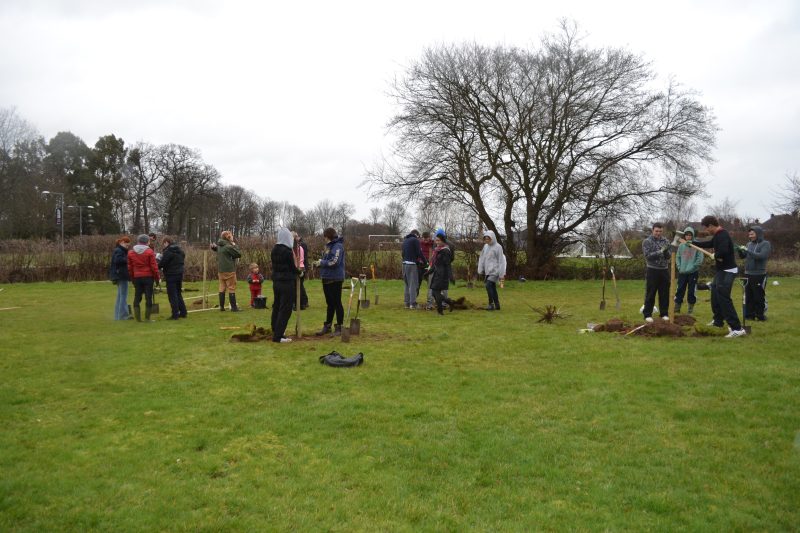
The planting of Fruit Routes trees took place over the winters of 2010 and 2011. Trees were sourced from the Agroforestry Research Trust’s nursery at Dartington, Devon; Cool Temperate in Nottingham; Adam’s Apples in Devon; and Frank Matthews in Worcestershire. A wide variety of trees was sought, including a number of rare varieties. Further information on the planting rationale can be found here.
Fruit Routes was run as a collaboration between Culhane and the University’s Sustainability and Gardens teams until 2022, with Harvest Festivals taking place in late spring and early autumn, each consisting of communal eating, arts activities and ecological walks and talks. At this point, stewardship of the project passed on to Fruit Routes Steering Group, consisting of a freelance artist, representatives from the University and local community members. Since 2026, Fruit Routes has been overseen by LU Arts and the University’s Sustainability and Gardens teams. It is listed as a ‘key area’ for biodiversity in the University’s RAISE Nature Plan 2026-2030.